Your baby loves to stand! In the exersaucer, in the jumper, and when you hold them, they’re always so happy, and their legs seem so strong. It’s so easy to think, let’s just get them walking instead. What can it hurt?
Guest Blogger:
Pediatric physical therapist team
Gwinnett County Public Schools
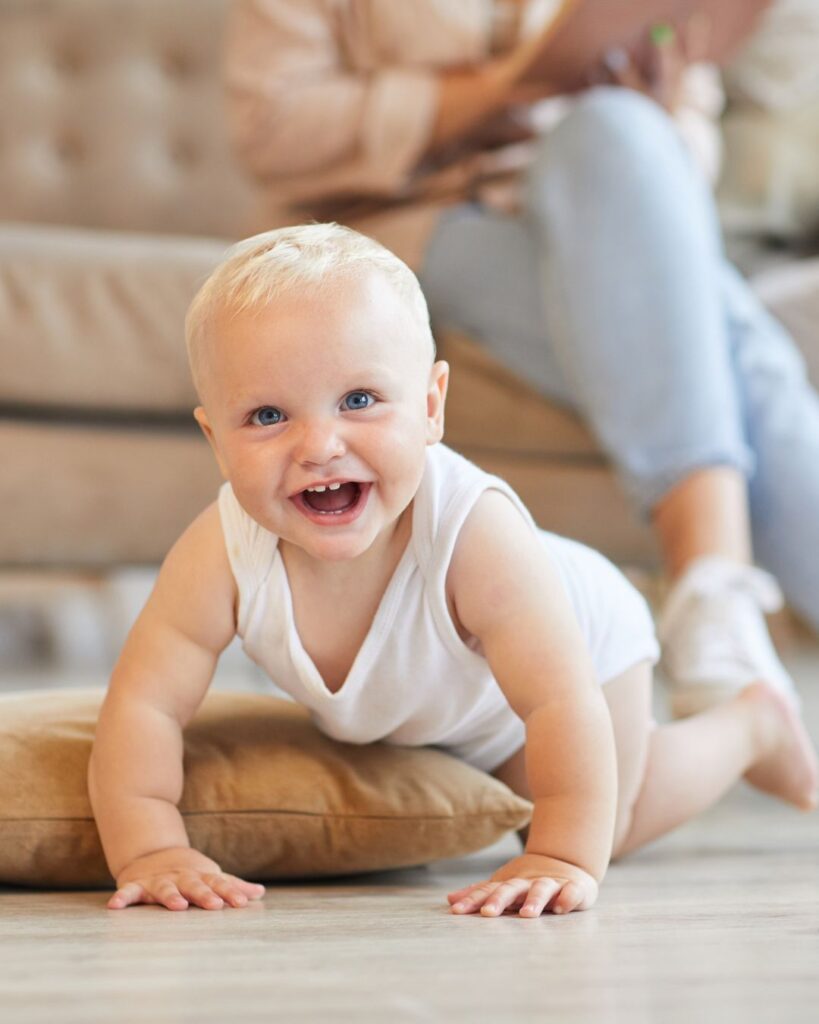
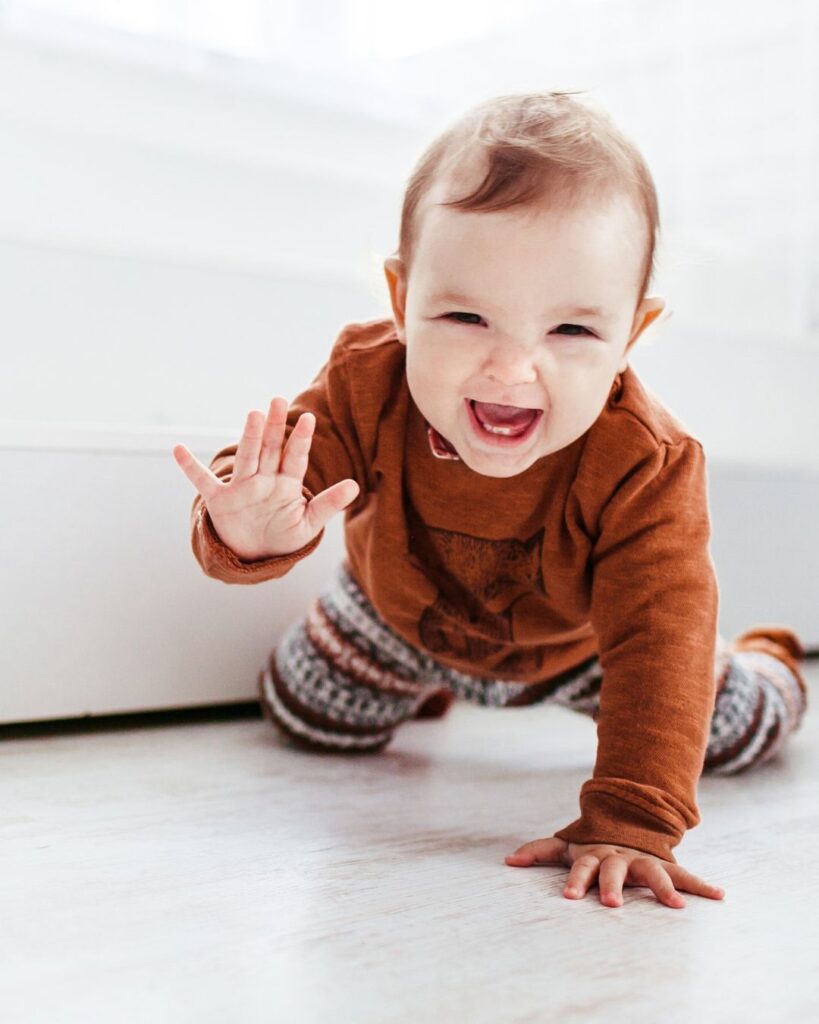
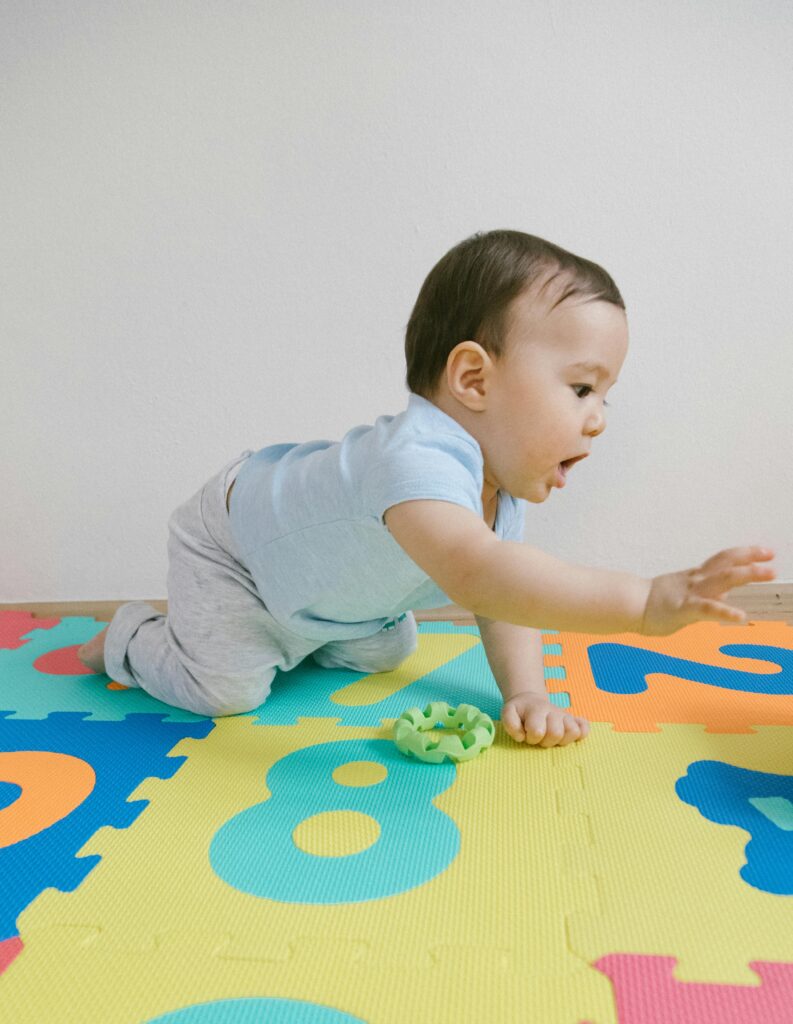
Crawling gets a bad rap for being something that’s not necessary. Crawling actually benefits babies in many ways.
It promotes STRENGTH.
Crawling can help strengthen the baby’s shoulders, chest, core, and hip muscles. This strength can improve their balance and posture in sitting, standing, and walking. It particularly benefits the stability of the shoulder and hip joints. Having more stable shoulders can improve handwriting and other fine motor tasks as the child ages, and more stable hips can improve walking and running.
It promotes VISUAL DEVELOPMENT.
When crawling, babies scan the ground for obstacles or interests as well as lift their heads to focus on objects in the distance. This helps them to develop depth perception, tracking skills, and the ability to switch between near and far vision.
It promotes BRAIN DEVELOPMENT.
Babies who crawl show a better ability to visualize the rotation of objects, a better ability to recall things from memory, and better depth perception. The cross-body movement of crawling improves the communication and development of the connection between both sides of the brain.
It promotes SENSORY DEVELOPMENT.
Crawling over different textures helps to introduce babies to feeling a variety of textures and temperatures of the ground through their hands. This can help to reduce sensitivity that some babies might have to touching textures.
The movement of the baby’s head through different positions also helps to develop the baby’s vestibular system, which helps them to know where their body is in space and further enhances their balance development when standing and walking.
How do you know when your baby might be ready to crawl?
There are certain skills that a physical therapist looks for to know when a baby is ready to progress to the next developmental stage. These are called Precursor Skills. They aren’t required, but they show us that a baby’s strength and skills are developing and transitioning between stages.
Some skills that we would look for to know that a baby is ready to work on crawling are:
• Rolling in all directions
• Sitting independently
• Swimming and spinning on tummy
• Rocking on hands and knees
So if your baby is demonstrating some or all of these skills, how are you supposed to work on crawling with them?
If your baby is stuck swimming on their tummy, prop a pillow or your leg under their tummy to help them play in a hands and knees position. Raise toys off the floor to promote a need for the baby to be taller than the floor level.
If your baby is stuck rocking on their hands and knees, play with the child in the hands and knees position, working on lifting their hand to reach for a toy, so they can work on shifting their weight to one side and supporting themselves with one hand.
When in doubt, get toys that move! Balls are great because they roll away, creating a need for the baby to move, too.
Crawling may not seem like a big deal, but it actually plays a very important role in your baby’s development. It helps build strong muscles, sharp vision, a smart brain, and a healthy sense of balance. While it can be tempting to skip ahead to walking, giving your baby time to crawl can set them up for success in many areas as they grow. If your baby is showing signs they’re ready, try some fun ways to help them practice. With a little support and encouragement, they’ll be on the move in no time!
Take the Child Development Survey by answering questions based on what your child is able to do at their current age. Then we will provide you with a personalized list of resources that can help your child thrive in Kindergarten.